

When we start playing a slot like Starburst, the conversation hardly ever focuses on session management. Instead, we discuss the cosmic gems, the arcade-style soundtrack, and that moment when the expanding wild locks into place. Yet how we structure our time and bankroll around a game decides whether we walk away with a clear head or a sense of regret. Session management is not about curbing pleasure; it is about offering ourselves the space to appreciate the mechanics, the visuals, and the rhythm of play without losing control. In the UK, where digital slot play has become a popular pastime, a new method to managing sessions can change a casual spin into a genuinely satisfying pastime. This article uses Starburst Slot as a useful example, because its fixed paylines, transparent return-to-player percentage, and well-documented volatility make it an excellent learning resource. We will explore how to harmonize our expectations with the game’s mathematical design, set boundaries that feel natural, and read the signals our own behaviour sends during a session. By the end, we will have a solid structure that works whether we are spinning for five minutes or an entire evening.
Comprehending RTP and Volatility as Gaming Anchors
Every slot play begins with two numbers that subtly shape our experience: the return-to-player rate and the volatility score. In the case of Starburst Slot, the theoretical RTP is at 96.09%, a value that signifies the portion of total wagers the game is set to return to players over an enormous number of spins. What this signifies for a single session is far less predictable. Over the duration of a hundred spins, we may see a return of 40% or 150%, because short-term variance prevails. Recognising this difference between the long-term average and our immediate circumstance is the first foundation of session management. It stops us from chasing a loss under the false assumption that the machine “owes” us a win. Volatility, often described as low to medium for Starburst, reveals us that wins tend to arrive frequently but are usually modest in size. This is essential information for planning how long our bankroll might last. A low-volatility game can extend a modest deposit into a longer session, while a high-volatility title would burn through it faster with fewer, larger hits. We can utilize these metrics to choose in advance what kind of session we want: a steady, relaxed encounter or a shorter, more vigorous one.
Starburst’s volatility profile is molded by its symmetrical pay-both-ways feature and the expanding wild re-spin feature. Because winning combinations can arise from left to right and right to left across the ten fixed paylines, the hit frequency is fairly high. In practical terms, we can foresee a win approximately every four to five spins on average, though the amounts will often be under our total stake. This steady positive feedback keeps the session feeling active, but it also produces a subtle risk: small, frequent wins can lull us into extending our play beyond the scheduled time. By attaching our session to the known RTP and volatility, we set realistic expectations. We comprehend that a 100-spin session with a £0.10 stake will, on average, see a theoretical loss of around £0.39, but the actual outcome will fluctuate. This knowledge allows us to frame the cost of entertainment rather than viewing the slot as an income source. When we assimilate these numbers before pressing spin, we transform session management from a reactive chore into a proactive plan.
Useful Strategies for Concluding a Session Effectively
Concluding a slot session is a skill that needs as much care as beginning one. We have all known the urge to put “just one more” spin in, especially after a win or a annoying near miss. To address this, we can build a closing routine that is as systematic as our opening. For Starburst Slot, a realistic approach is to determine on a target number of spins or a time limit before we commence, and to set an alarm or a platform-based reality check that cannot be ignored. When the alarm goes off, we take three specific steps. First, we halt spinning immediately, even if a wild re-spin is in progress; the feature will complete, but we do not start a new spin. Second, we check the game’s session history or our own notes and record the outcome: starting balance, ending balance, and notable moments like a multi-wild sequence. This simple act of documentation converts the session from an emotional event into a data point. Over time, we develop a personal record that shows our actual cost of play and assists us to fine-tune our bankroll strategy.
Third, we take a physical break. Rise, walk away from the screen, and do something different for at least five minutes. This interrupts the immersive loop that slot design, with its continuous music and rapid spin cycle, is built to create. Starburst’s hypnotic gem animations and upbeat tempo are part of its appeal, but they can also make it hard to disengage. A deliberate pause enables the brain’s decision-making centres to re-engage. For UK players who use debit cards or e-wallets, we can also take this moment to monitor our overall spending across all platforms, not just the current session. If we observe a pattern of extended sessions or increasing bet sizes, that is a signal to adjust our limits downward for the next session. Ending well means exiting the game with a clear mind, regardless of the financial outcome. It means we are in control of the session, rather than the session managing us.
The Impact of Bonus Features in Game Duration
Starburst Slot preserves its bonus mechanics elegantly simple, and that simplicity is a valuable asset for session management. There are no separate free spins rounds, no scatter symbols, and no interactive mini-games. The whole bonus system revolves around the expanding wild and the re-spin it triggers. When a wild symbol lands on reel two, three, or four, it expands to fill the full reel, fixes in position, and gives one free re-spin. If an additional wild appears during that re-spin, it too grows and locks, giving a second re-spin. A third wild can land for a last re-spin, providing a peak of three consecutive re-spins with up to three completely wild reels. This feature is the engine behind the game’s 500x bet top winning potential, and it is the moment every player waits for.
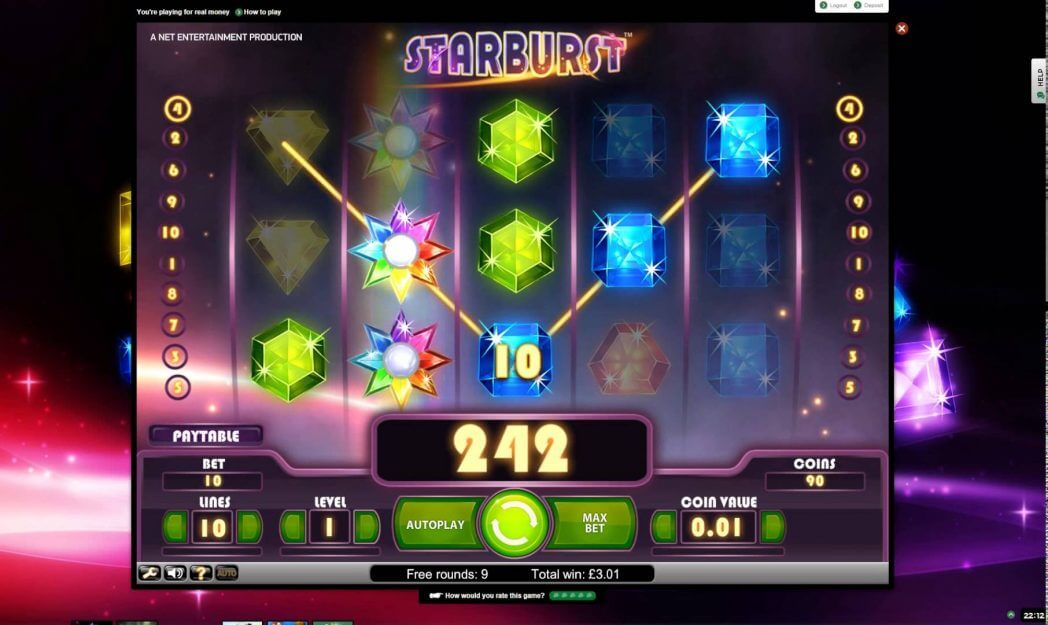
From a viewpoint of controlling sessions, the omission of a intricate bonus game alters how we allocate our time. In many modern slots, a bonus buy option or a free spins feature triggered by scatters can tempt us to hunt for a particular set of symbols, often resulting to extended, costly sessions. Starburst’s design removes that lure. The wild re-spin can activate on any spin at any time, with no requirement to gather three scatters. This randomness encourages a more relaxed approach; we are not monitoring spins until the next bonus, because there is no assurance it will arrive on a regular schedule. We can instead focus on the base game’s steady rhythm. The re-spin feature also resolves quickly, usually within a few seconds, so it does not dramatically extend a session the way a long free spins feature might. This ensures our time commitment predictable. If we plan a thirty-minute session, we can be assured that the game will not abruptly force us into a ten-minute bonus sequence. For players who value control over their schedule, this is a key benefit.
The way Paylines and the Pay-Both-Ways Mechanic Affect Pacing
Starburst Slot features a classic five-reel, three-row grid with ten fixed paylines that pay both ways. This design choice has a direct impact on the rhythm of a session. In a standard left-to-right slot, a near miss on the rightmost reel appears like a loss, even if symbols align from the right side. With the pay-both-ways structure, combinations that start on reel five and run to reel three qualify as wins. This effectively doubles the number of opportunities per reddit.com spin, which boosts the hit frequency and produces a smoother, less volatile feel. During a session, we notice fewer dead spins and more small payouts that maintain the balance ticking over. The psychological effect is a sense of momentum, as if the game is constantly engaging with us rather than delivering long stretches of silence.
However, this pacing can also conceal the speed at which our balance erodes. Because the ten paylines are fixed, we cannot reduce the number of active lines to lower our total bet. Every spin requires the full selected stake. The frequent small returns can build an illusion that we are breaking even when, over time, the house edge is steadily at work. Effective session management means tracking our balance not spin by spin, but in blocks of twenty or thirty spins. If we see a gradual decline despite regular wins, we can recognise the mathematical reality and decide whether to adjust our stake or conclude the session. The pay-both-ways mechanic also affects how we perceive the expanding wild feature. When a wild lands on the middle three reels and expands, it can complete winning combinations in both directions simultaneously, often resulting in multiple payouts from a single re-spin. These moments are the high points of any Starburst session, and understanding the payline structure enables us appreciate why they feel so rewarding. We can use this knowledge to set a mental checkpoint: if we have not seen a wild after a certain number of spins, we might choose to lower our stake to extend play or take a break entirely.
Selecting a Bet Range That Matches Your Session Length
The bet range on Starburst Slot runs from a minimum of £0.10 up to a maximum of £100 per spin, giving us tremendous flexibility. How we position our stake within that range is the single most influential decision we make for session longevity. A common mistake is to treat the bet level as a static number, when in fact it should be a dynamic choice tied directly to our session bankroll and the length of time we want to play. If we arrive with £20 and set the coin value to £1 per spin, our bankroll represents just twenty spins. At an average of five seconds per spin, the entire session could be over in under two minutes, leaving little room for the game’s features to activate. By contrast, dropping the stake to £0.20 stretches the same £20 into one hundred spins, giving the expanding wild re-spins multiple opportunities to appear. The mathematics is simple, but the discipline to apply it consistently requires practice.
We recommend dividing the session bankroll into at least one hundred betting units. For Starburst, that means if we have £50, we should consider a maximum stake of £0.50 per spin. This guideline is not arbitrary; it is based on the game’s hit frequency and the typical number of spins needed to encounter the signature wild re-spin sequence. The expanding wild feature, which triggers when a wild symbol lands on reels two, three, or four, expands to cover the entire reel and awards a free re-spin. Up to three re-spins can occur if additional wilds land. Because this feature is the primary driver of larger wins, we want to survive long enough to see it activate several times. A session that ends before a single wild appears feels unsatisfying. By calibrating our bet size to our bankroll, we give the game’s mathematics enough runway to deliver its intended experience. For UK players who are accustomed to responsible gambling messaging, this approach translates the abstract idea of “set a budget” into a concrete, game-specific plan.
Recognising the Clues of a Session That Has Peaked
One of the key session management skills we can develop is the ability to recognise when a session has arrived at its natural high point. In Starburst Slot, the most evident sign is a sequence of expanding wild re-spins that produces a return of 50x bet or more. Because the game’s top payout is fixed at 500x the bet, a hit of that scale represents a substantial part of the potential profit. The odds indicates that such events are rare, and pursuing a subsequent large win straight after the initial often causes returning a large amount of the profit. We are not saying that a further big win is impossible, but the chance is low enough that the expected value of continuing is unfavourable. A astute player will spot this time and weigh up banking the profit.
There are more subtle signs as well. If we have been gaming for three-quarters of an hour and our bankroll has been moving within a tight band, online login starburstslot, the session may have reached a standstill where the entertainment value is fading. The initial enjoyment of the visuals and sound can wear off into mechanical repetition. At this point, continuing is not so much about playing the game and instead about wishing for a turn of events. Session management instructs us to distinguish the desire for a win from the act of playing. We can put in place a policy in ahead of time: if our balance declines to 50% of its high point or if we have not experienced a wild re-spin in 100 spins, we will stop the session. These concrete prompts eliminate feeling from the judgment. In the UK, where options like deposit restrictions and session reminders are easily on offer on licensed sites, we can also utilise the game’s own session history to check our results. A quick glance at the balance graph often reveals a declining pattern that our faulty memory might overlook. Recognising a session that has peaked is not about gloom; it is about maintaining the pleasant memories we had when the session was at its best.
Developing a Personal Session Framework Based on Starburst Slot
All the individual techniques we have talked about become stronger when incorporated into a unified personal framework. We can develop a straightforward checklist that we go over before every session. The list might include the following items:
- Determine a total session bankroll and divide it by 100 to determine the maximum bet per spin.
- Choose on a time limit or a spin count, and enable a reality check on the platform if available.
- Check the game’s RTP (96.09%) and volatility (low-medium) to adjust expectations.
- Identify the session’s primary goal: entertainment, a chance at a big win, or simply relaxation.
- Outline a stopping trigger, such as a 50% balance drop or a win exceeding 50x stake.
- Promise to a post-session routine of recording results and taking a break.
This framework is not fixed; it adapts to different moods and bankrolls. What stays constant is the principle of intentionality. When we tackle Starburst Slot with a solid plan, the game’s design elements work in our favour. The frequent small wins become satisfying affirmations rather than traps. The expanding wild re-spins become engaging highlights rather than signals to chase. The pay-both-ways mechanic becomes a wellspring of steady engagement rather than a mask for losses. Over time, this strategy transforms slot play from a reactive activity into a deliberate leisure choice. We begin to notice patterns in our own behaviour: perhaps we tend to increase our bet size after twenty minutes, or we realise it harder to stop after a losing session than a winning one. These understandings are the real reward of session management, because they offer us the power to adjust and improve. In the UK, where the conversation around gambling increasingly highlights player empowerment, taking this level of ownership over our play is both a personal benefit and a cultural shift. Starburst Slot, with its transparent mechanics and elegant simplicity, is the ideal training ground for these habits.
Session management is not a set of restrictions; it is a lens that brings the whole experience into focus. By comprehending the mathematical heartbeat of Starburst Slot, setting a bet range that matches our bankroll, reading the pacing of the paylines, and learning to detect when a session has reached its peak, we evolve ourselves from spectators into knowledgeable players. The game’s expanding wilds and galactic graphics remain just as thrilling, but they operate within a system we have decided upon. The next time we start the reels, we can do so with a focused mindset, a clear strategy, and the assurance that we will leave at the correct time, win or lose. That is the updated approach on slot session management, and it is relevant to every spin we take.